Sanza or thumb piano, made from a Huntley & Palmers biscuit tin
Wood and metal - early 20th century
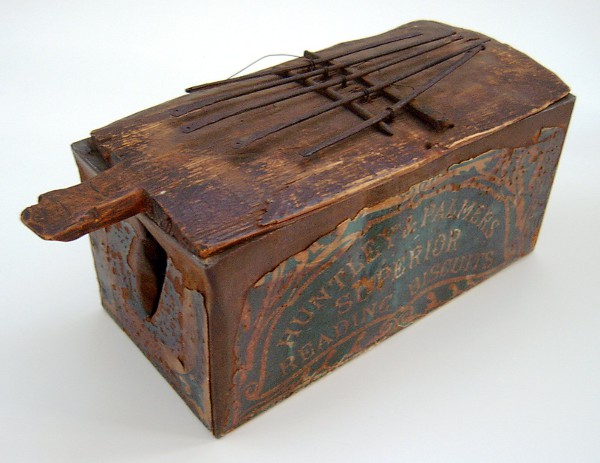
African thumb piano with sound box made from a Huntley & Palmers biscuit tin
This type of instrument is known by different names in various parts of Africa: mbira, kalimba, and sansi. Europeans call them thumb pianos or lamellaphones. It has been made using a recycled Huntley & Palmers biscuit tin. Their tins were reused in many different ways. In Uganda, bibles and prayer books had to measure three inches by three inches to fit into Huntley & Palmers' two pound tins. These were about the only containers that could stop the white ants (termites) eating the paper.
In his 1899 story The Heart of Darkness, Joseph Conrad used an image of an empty Huntley & Palmers biscuit tin as a symbol of European colonial power and destruction in Africa. By 1900 Huntley & Palmers was the largest biscuit manufacturer in the world and there were very few places they had not reached through Britain's colonial networks. The firm's name even travelled along trade routes ahead of western expeditions. In 1904 the first Europeans to visit the holy city of Lhasa in Tibet were welcomed with Huntley & Palmers biscuits.
Museum object number