'Winter Room' mosaic
From Silchester - Roman
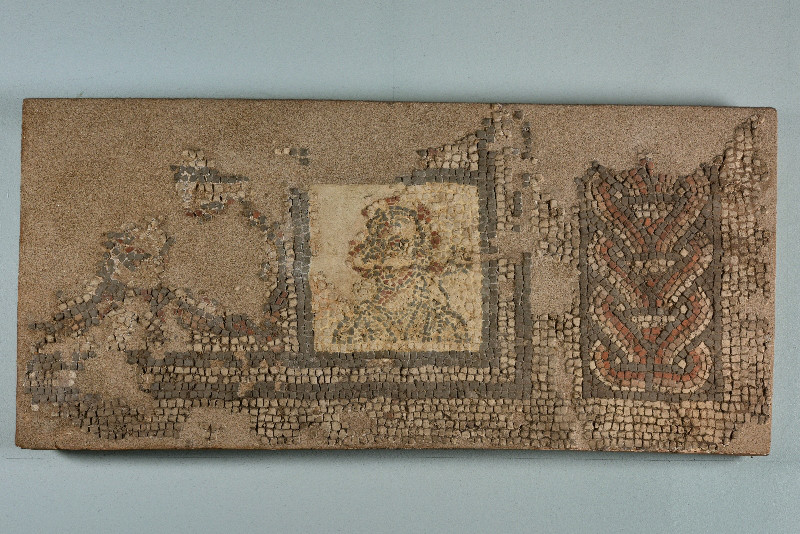
'Seasons' mosaic displayed on stairs at Reading Museum
This stone and pottery mosaic floor comes from the Roman town of Calleva Atrebatum, at Silchester, about 10 miles south-west of Reading. The town was established by native tribes in the century before the Roman conquest of AD43. After the conquest, the wealthier townspeople imported luxury items from the continent and adopted many Roman ways. Excavation between 1890 and 1909 by the Society of Antiquaries uncovered many artefacts, including some 13 mosaic pavements.
This one was uncovered during excavations Calleva by the Society of Antiquaries in 1902. Each room in each house uncovered in an insula, or area of the town, was given a number. This piece of mosaic was found at insula XXVI, house number 1 in room 17. It initially came into the Museum on loan from the third Duke of Wellington and was later purchased from the eighth Duke in 1978.
Mosaic floors are made by setting naturally coloured cubes of stone, glass, tile or pottery, known as tesserae, into mortar to make patterns or illustrations. Only this small fragment from one corner survived of a once large and fine pavement. The illustration is a crude bust of one of the goddesses representing 'Seasons', possibly Flora, or Ceres the goddess of agriculture, wearing a grey robe with red flowers at the shoulder.
Museum object number